Only bump during the game and under the facilitator's supervision. Never pin, trap, kick, step on or deliberately trip another player.
Game guide
Bubble Soccer Games and Rules.
Play football and other team games in bubble suits. Our facilitators explain each game, set the contact rules and give everyone a turn.
- Contact rules explained first
- Short rounds with rotations
- Game modes for different groups
Core rules
Contact rules, clear limits.
We can change the games to suit your group. These contact rules apply throughout the session.
Tuck your chin and legs in and do not try to break a fall with your arms. Facilitators explain the technique before play.
Stay inside the marked play area and stop when the facilitator calls a pause. Non-players remain outside the arena during active rounds.
Game modes
More than one match.
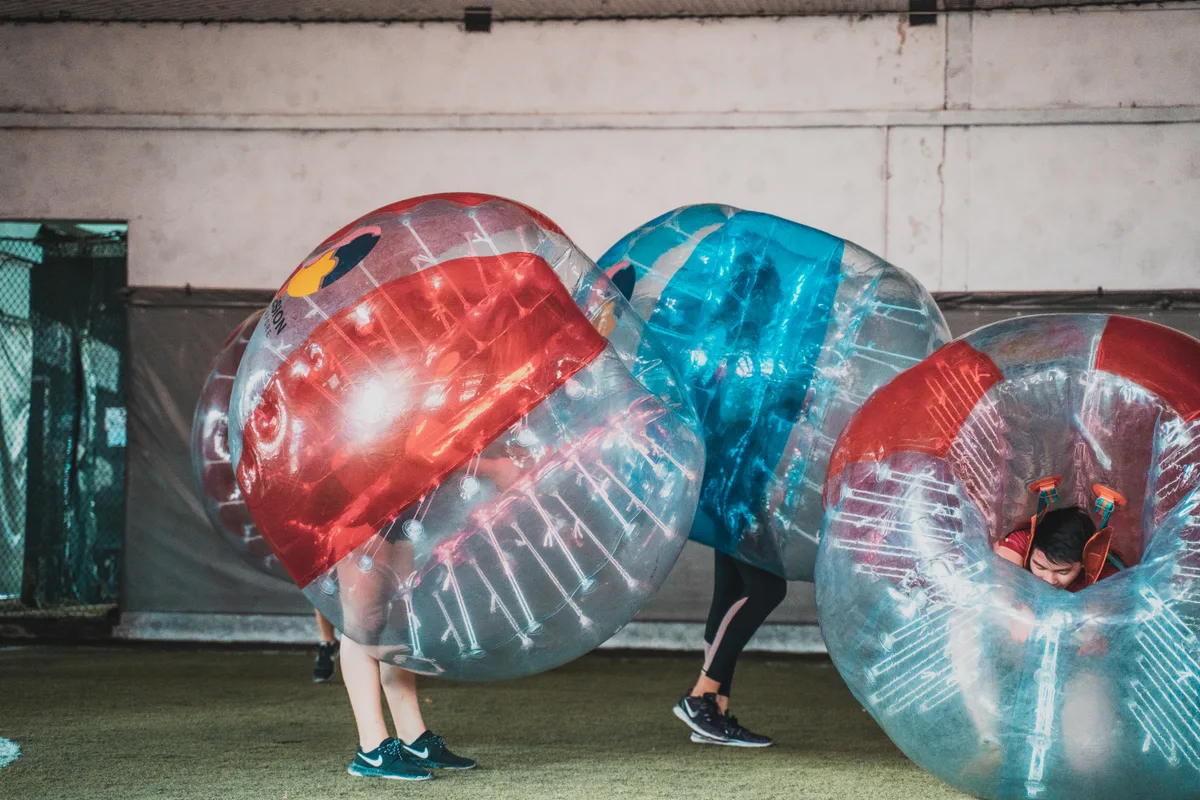 Bubble Soccer
Teams try to score goals while wearing bubble suits, with short matches and quick resets.
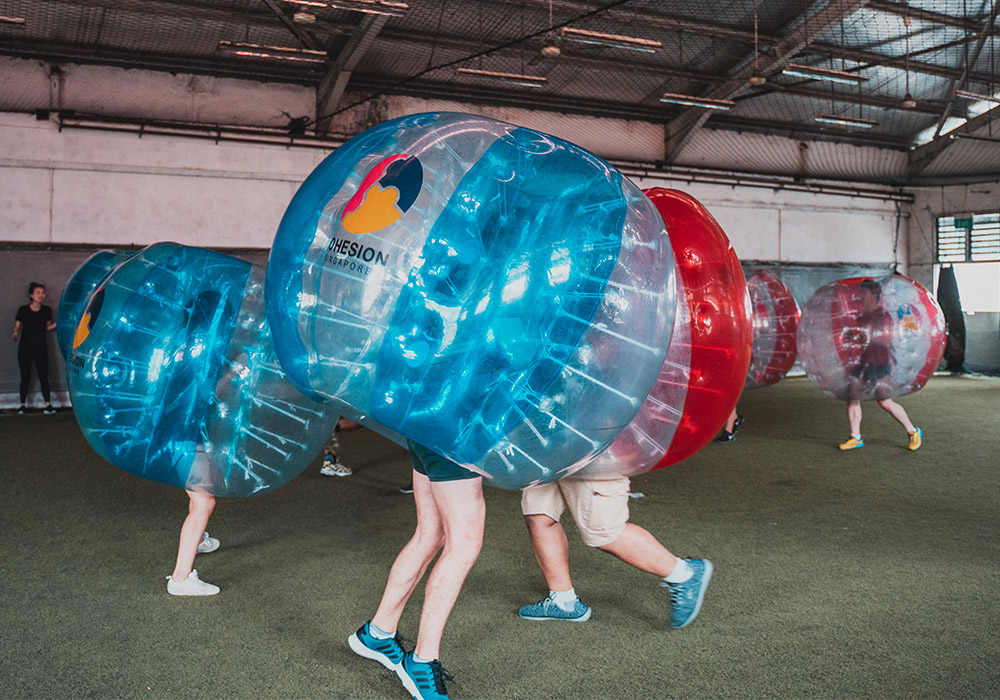 Bubble Captain
Teams protect their own captain while trying to move that captain from base to the opponent zone.
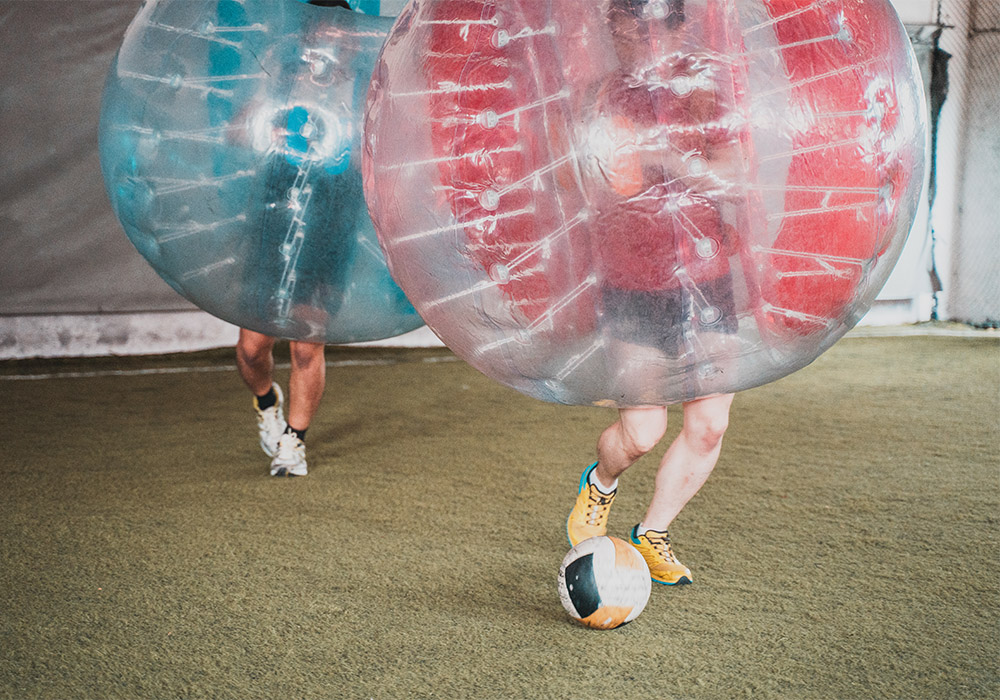 Bubble Invasion
Teams race to move all members into the opponent zone while blocking and bumping the other side.
 Bubble Dodgeball
Teams try to knock opponents down using controlled contact. Facilitators explain the limits before the round starts.
Scoring
Know what wins each round.
Each head-to-head match awards 3 points for a win, 1 for a draw and 0 for a loss. The win condition changes by game mode, and facilitators explain it before each round.
The team with the most goals when time runs out wins. Equal scores mean a draw.
Win by eliminating the other team, or by having more players standing when time runs out.
In Captain, get your captain into the other team's zone. In Invasion, get your whole team across.
Rotations
Keep rounds short.
Short rounds give players time to catch their breath. While resting, you can cheer friends on and take photos from outside the play area.
- Smaller groups can play more continuous rounds.
- Larger groups take turns, with planned breaks between games.
- Participants should be aged 10 or above; groups near the minimum age may need more instruction before contact starts.
- Team names and clear scores help company groups follow the competition.

Games FAQ
Rules questions before you play.
A few clear answers help the group know what the session will feel like before the first whistle.
No. Facilitators explain each game before you play. You need to be comfortable with movement and controlled contact, but you don't need football skills.
A session can include Bubble Soccer, Bubble Invasion, Bubble Captain and Bubble Dodgeball. The mix depends on group size, session plan and participant comfort.
Rounds are usually short, with time to rest and swap players. We plan breaks around your group size and how comfortable everyone is with the activity.
Facilitators explain the activity flow, boundaries, pause signal and fall technique before play. They control starts, stops, restarts and safety pauses, and do not allow pinning, trapping, kicking, stepping on, deliberate tripping or unsupervised bumping.
Yes. We adjust the round mix, instruction, rotations and rest points to the confirmed group and event plan.
Want the right game mix?
Send your group details.
Tell us the date, group size, age range, event type, and venue idea. We will suggest a session style that fits.